TALES FROM THE SOUTHERN CONE: ARGENTINA, CHILE & URUGUAY
 |
Soledad by Eduardo Acevedo Díaz
A tale of love and vengeance from 19th century Uruguay, whn a gaucho fallsm in love wth a rancher’s daughter. Now available in English for the first time. |
 |
Mysteries of the River Plate by Juana Manso de Noronha
1838. Proscribed and exiled by President Juan Manuel de Rosas, Valentín de Avellaneda tries to escort his family to a place of safety upriver. They are captured by Rosas’ henchmen and he is brought back to Buenos Aires in chains, to stand trial as an enemy of the state . . . |
 |
Brutal Tales by Ernesto Herrera
This aptly titled collection of short stories lays bare the author’s anger at the injustice and brutality he witnessed in contemporary Uruguayan society, depicting a world in which desperation and violence go hand in hand. Over a century after their publication, these stories are presented here in English for the first time. |
 |
The Yocci Well by Juana Manuela Gorriti
A love story, ghost story and gothic horror rolled into one, the action in The Yocci Well takes place in two parallel periods spanning twenty years, contrasting Argentina’s War of Independence with the savagery of the civil wars that followed. This brilliant novella is now available in English for the first time. |
 |
Burnout by Patricio Jara
Around the year 1875, Lucio Carbonera, a trader in contraband tobacco, finds himself in Paraguay and chances upon a number of unusual individuals: a man with two heads, a shy Venezuelan covered in a thick black coat of hair and a boy with distinctly amphibian features. They form a troupe of exotic entertainers, touring the Southern Cone, and eventually make their way down into Chile, where they discover that in some towns the welcome is distinctly warmer than in others . . . |
 |
An Oasis in Life by Juana Manuela Gorriti
A young man returns to Buenos Aires from his childhood exile in Paris. Both of his parents are dead. On the transatlantic crossing, he meets a young woman who has also suffered misfortune, following the death of her father. He is completely smitten by her. The pair meet again in Buenos Aires and their romance deepens, but although the young man has a decent job, he feels he has insufficient resources to support a wife. Then, out of the blue. . . |
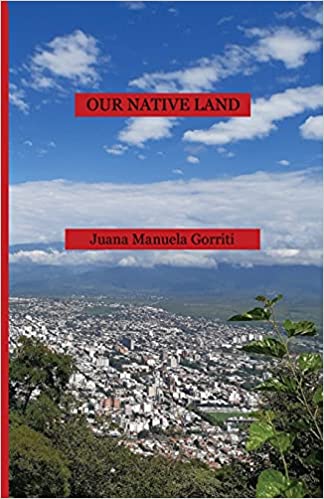 |
Our Native Land by Juana Manuela Gorriti
Juana Manuela Gorriti’s last major work, published in 1889, relates a physical journey through northern Argentina as well as a voyage back through her memories of the people and events she had known and experienced along the way. This fascinating insight into her life and times is now available in English for the first time. |
 |
Rough Notes taken during some rapid journeys across the Pampas and among the Andes by Sir Francis Bond Head
In 1825 Captain Francis Bond Head retired from the army to take up a post with a mining company to survey and report on mining opportunities in Chile and Argentina, travelling back and forth across the continent and earning him the nickname “Galloping Head”. His travel notes were much admired by Charles Darwin on his own journey from ocean to ocean six years later. |
TALES FROM MEXICO
 |
Sombreros are Becoming by Nancy Johnstone
In 1939, in the final stages of the Spanish Civil War, Nancy and Archie Johnstone made a desperate dash for the border with the children they had sheltered in their hotel in Tossa de Mar. Once in France the children were interned in a concentration camp. After doing all they could to help, the Johnstones went into exile in Mexico. Sombreros are Becoming is a light-heartened account of how they rebuilt their lives in Cuernavaca. |
TALES FROM CUBA: TWO REVOLUTIONS
 |
Wild Green Oranges by Bob Baldock
Bob Baldock spent five months in the Sierra Maestra of Cuba in1958 with Fidel Castro’s combat unit, Movimiento 26 de Julio. While there, he was the only U.S. citizen from the mainland to see action in combat with Fidel’s unit. Essentially autobiographical, Wild Green Oranges is a novel based on those experiences. |
 |
What One Man Saw by Harrie Irving Hancock
The US declared war on Spain in April 1898 and in June the first detachment of the notorious “Rough Riders” landed on Cuban shores. Travelling alongside them were a number of “embedded” journalists, including the thirty-year-old Harrie Irving Hancock. This is what he saw. |
BOOKS IN SPANISH
 |
por Juana Manuela Gorriti |
 |
por Juana Manuela Gorriti |
 |
por Rosa Guerra |
 |
por Juana Manso de Noronha |
 |
Su majestad el hambre: cuentos brutales por Ernesto Herrera |

 TheClaptonPress